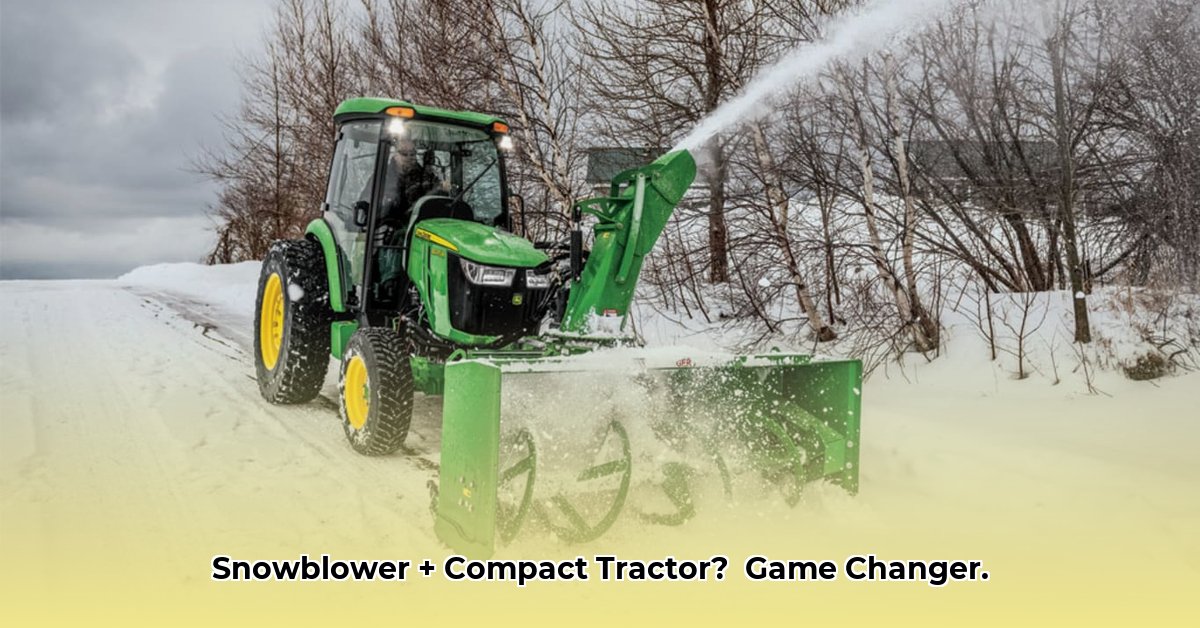
Winter's arrival often means battling snowdrifts, a challenge easily overcome with a compact tractor and the right snowblower attachment. This comprehensive guide helps you choose and effectively utilize a compact tractor snowblower, transforming a daunting task into a manageable one. We'll compare attachment methods, power sources, and operational styles to ensure you make an informed decision and conquer winter's icy grip. For even more options, check out these snow removal attachments.
Attachment Methods: Loader-Mount vs. 3-Point Hitch
Attaching a snowblower to your compact tractor involves two primary methods: loader-mount and 3-point hitch. Both offer distinct advantages and disadvantages.
Loader-Mount: This system resembles quickly swapping tools. Its ease of attachment and detachment makes it ideal for switching between tasks. However, loader-mount snowblowers are typically smaller, limiting their effectiveness in heavy snowfalls. They require a front-end loader on your tractor, which might not be a standard feature for all models.
3-Point Hitch: This method provides greater stability, particularly beneficial for larger, more powerful snowblowers capable of handling significant snowfall. The attachment process, however, is more time-consuming and requires precise positioning. It offers compatibility with a wider range of compact tractors.
| Feature | Loader-Mount | 3-Point Hitch |
|---|---|---|
| Attachment Speed | Quick and easy | More time-consuming, requires precise positioning |
| Snowblower Size | Typically smaller | Can accommodate larger, more powerful units |
| Stability | Less stable in heavy snow | More stable, better weight distribution |
| Tractor Compatibility | Requires a front-end loader | Compatible with more tractor models |
The best choice depends on your tractor's capabilities and your typical snowfall. Light snow might warrant a loader-mount; heavy snow necessitates a more robust 3-point hitch system.
Power Sources: PTO vs. Hydraulic
Powering your snowblower involves two primary options: Power Take-Off (PTO) and hydraulics.
PTO (Power Take-Off): This method directly connects the snowblower to your tractor's engine, providing considerable power for heavy-duty snow removal. However, this demands a robust PTO system on your tractor and may require more maintenance.
Hydraulic: This system leverages your tractor's hydraulic system, providing smoother, more controlled operation. While it typically offers less raw power than PTO, the precise control and reduced strain on your tractor are significant advantages. Hydraulic systems offer better variable speed control for precise snow clearing.
Consider these factors when deciding: Do you prioritize raw power (PTO) or smooth, controlled operation (hydraulic)? Ensure your tractor's horsepower (for PTO) and hydraulic flow rate meet the snowblower's requirements. Check your tractor's manual for specifications.
Operational Styles: Forward vs. Reverse Snow Blowing
Snow removal effectiveness and safety depend greatly on the direction of snow blowing.
Forward Snow Blowing: This offers superior visibility, crucial for safe operation, particularly in areas with obstacles or limited maneuverability. It provides better control and awareness of your surroundings.
Reverse Snow Blowing: While seemingly convenient for clearing a path behind the tractor, this method significantly compromises visibility and control, increasing the risk of accidents. Use reverse blowing only in extremely controlled environments and at very low speeds.
Key Specifications: Understanding the Numbers
Before purchasing, understand key specifications affecting your snowblower's performance.
- Cutting Width: This determines the width of snow cleared in a single pass. A wider cut means fewer passes, saving time and effort.
- Cutting Depth: The depth the snowblower can cut into the snow. A deeper cut is vital for deep snowfalls.
- Auger Design & Impeller Size: These components work together to move snow. Larger augers and impellers handle more snow, increasing efficiency in heavy conditions.
- Chute Rotation: Adjustable chutes allow precise snow direction, avoiding obstacles and maximizing efficiency.
Larger cutting width and depth usually indicate a more powerful (and expensive) snowblower. Match the specifications to your needs and typical snow conditions.
Choosing the Right Snowblower: A Step-by-Step Guide
Selecting the right snowblower is a significant investment. Follow these steps for a successful purchase:
- Assess your needs: Consider the amount and type of snowfall, the area needing clearing, and the terrain.
- Verify tractor capabilities: Check your tractor's horsepower, hitch type (3-point hitch or front loader), PTO horsepower (if applicable), and hydraulic flow rate.
- Select attachment method: Choose between loader-mount and 3-point hitch based on your tractor and needs.
- Determine power source: PTO or hydraulic, depending on your power needs and tractor capabilities.
- Define specifications: Choose cutting width, depth, auger design, and chute rotation based on your snow conditions and area to clear.
- Set your budget: Snowblowers vary in price; establish a realistic budget.
- Compare models: Research different models and read reviews from other users.
Installation and Maintenance: Ensuring Longevity and Safety
Proper installation and maintenance are crucial for your snowblower's lifespan and your safety.
Installation: Always follow the manufacturer's instructions precisely. Incorrect installation may lead to damage or injury.
Maintenance: Regular maintenance, including lubricating moving parts and inspecting for wear and tear, extends the snowblower's lifespan. Regularly check the auger and impeller for damage and keep the chute clear. Consult your owner's manual for a detailed maintenance schedule.
Conclusion: Conquering Winter with Confidence
Choosing the right compact tractor snowblower requires careful consideration of individual needs, tractor capabilities, and budget. This guide provides the knowledge to make an informed decision, ensuring efficient snow removal and a peaceful winter. Remember to always prioritize safety and consult your owner's manuals.